How to use foot scrub on heels that have gone hard?
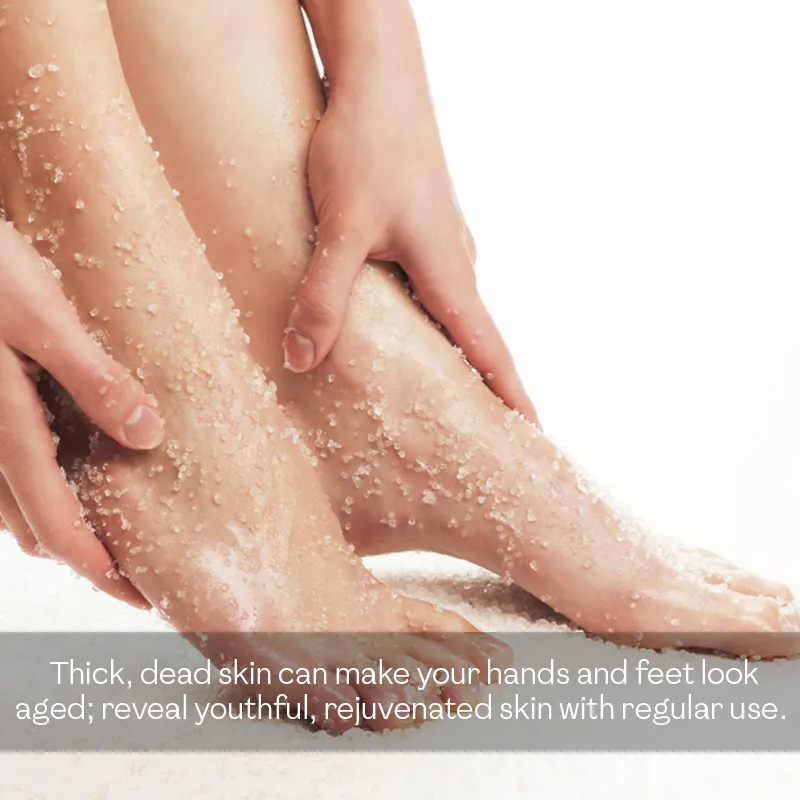
Soak first for ten minutes, then scrub gently, then moisturise and cover. The soak is not optional — hard skin is difficult to remove dry and easy to remove once it has taken up water. Repeat twice a week and you will get further than one long, hard session ever gets you.
What makes the best foot scrub for hard heels?
A base that stays behind after rinsing, an abrasive fine enough not to scratch, and a size you will keep using. Grit alone is not the answer: a scrub that removes dead skin and leaves nothing occlusive behind lets the heel dry out and thicken again within days. It is worth comparing everything else in scrubs before you choose.
Why does the hard skin come back so quickly?
Callus is a response, not a defect. Skin thickens where it is repeatedly pressed or rubbed, so as long as you walk, stand or carry, it will rebuild. Scrubbing harder speeds that up rather than slowing it down. Regular light removal plus daily moisturising keeps it manageable, and our thicker jar for elbows and knees handles the moisturising half.
Is it too rough for the backs of my hands?
The backs of the hands are thinner than palms or heels, so go lighter and less often — once a week, with barely any pressure. If the skin looks pink afterwards you used too much force.
Will it lighten dark knuckles and dark heels?
Partly, and by a mechanism worth understanding. Thickened dead skin holds old pigment and scatters light, so removing it makes those areas look lighter straight away. That is a real result, but it is removal rather than a change in melanin, so it needs repeating rather than finishing. Dry, rough skin darkens this way all over the body, not only on hands and feet.
Should I use it before or after a shower?
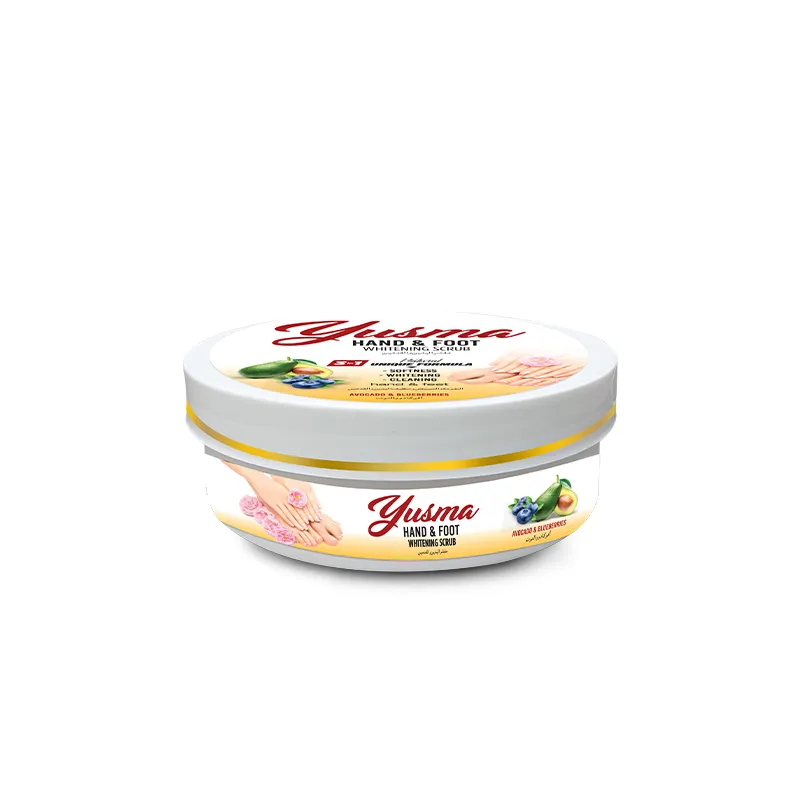
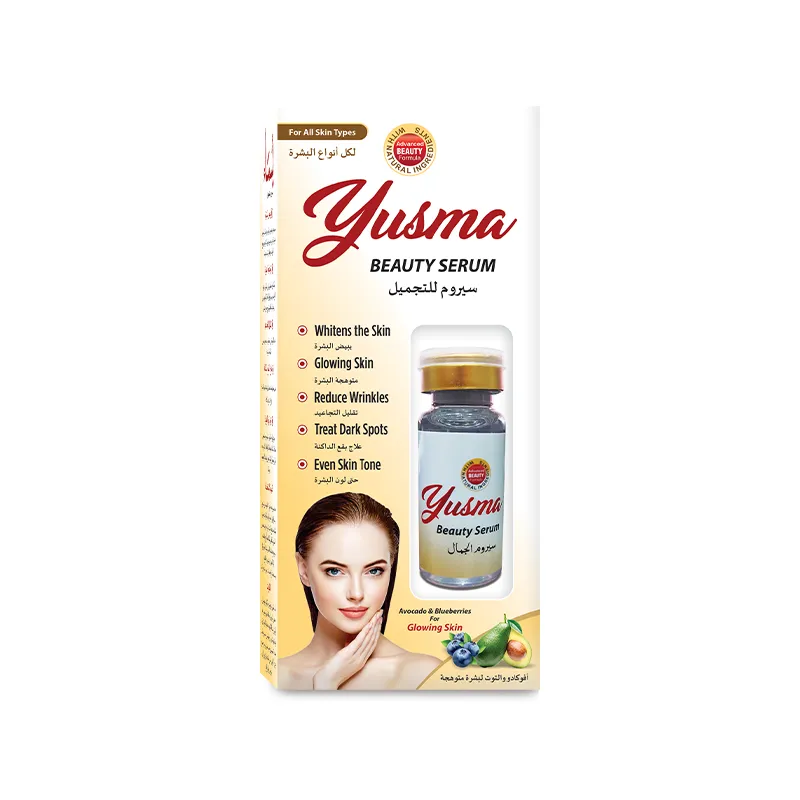
During, at the end. A shower softens the skin the same way a soak does, so scrub in the last few minutes rather than at the start. If you are doing feet properly, a basin of warm water while you sit beats standing in a shower, because you can reach the heel. The full Yusma range follows the same order: soften, treat, seal.
What should I do about a heel that has cracked?
Stop scrubbing that area. A crack is an open wound, and abrasive on it will hurt and can let bacteria in. Keep it moisturised with something thick, cover it overnight, and see a pharmacist about a urea-based cream, and come back to the scrub once the skin has closed.
Can I use it if I have diabetes or numbness in my feet?
Ask your doctor first. Reduced sensation means you cannot feel how hard you are pressing or notice a small injury, and foot injuries in diabetes are treated seriously for good reason. Professional foot care is the right route rather than any home scrub.



Reviews
There are no reviews yet.